Loading... Today

-- 0

-- 0
The Print Times
Indian Real Estate Sector
The Indian real estate sector remains one of the key contributors to the country's economic development, supported by rapid urbanisation, rising household incomes, favourable demographics and continued infrastructure investments. The sector has witnessed steady growth across residential, commercial and industrial segments, driven by increasing demand for quality housing, expanding business activity and improving connectivity across metropolitan and emerging urban centres.
The Indian real estate market was valued at USD 532.61 bn in 2025 and is projected to reach USD 1,264.00 bn by 2034, registering a CAGR of 10.08% during 2026-2034. The market's growth is being supported by rising disposable incomes, favourable government policies, increasing foreign investments and sustained infrastructure development across major cities and growth corridors.
Regulatory reforms and policy initiatives have played an important role in improving transparency and strengthening investor confidence in the sector. Measures such as the implementation of the Real Estate (Regulation and Development) Act (RERA), affordable housing initiatives and infrastructure development programmes have enhanced market credibility and supported organised sector growth. In addition, increasing private equity participation and foreign investments continue to reinforce the long-term growth prospects of the industry.
The sector is also benefiting from large-scale investments in transportation infrastructure, smart city projects and industrial corridors, which are improving connectivity and unlocking new development opportunities. These initiatives are contributing to the emergence of new residential and commercial hubs while supporting demand across established and developing real estate markets.
The residential segment continues to be the largest component of the Indian real estate market, accounting for 78.8% of the market in 2025. Demand has been supported by growing urbanisation, the expansion of the middle-income population, increasing nuclear families and improved access to housing finance. Government initiatives such as the Pradhan Mantri Awas Yojana (PMAY), together with incentives for homebuyers and ongoing infrastructure development, have further strengthened the residential housing market across metropolitan and Tier-II cities.
Looking ahead, the Indian real estate sector is expected to remain supported by favourable demographic trends, rising urbanisation, growing housing demand, infrastructure expansion and continued policy support. Increasing formalisation of the sector, improved regulatory oversight and sustained investment activity are expected to create long-term growth opportunities across residential, commercial and mixed-use developments.
RESIDENTIAL SECTOR
India's residential real estate sector continued to demonstrate resilience in 2025 despite moderation from the exceptionally strong activity levels witnessed in recent years. While several major markets entered a phase of consolidation following multiple years of robust expansion, residential demand remained supported by favourable macroeconomic conditions, healthy employment generation, urbanisation and sustained end-user interest. Market activity across major cities remained well balanced, with developers adopting calibrated launch strategies and maintaining prudent inventory levels. Inventory overhang across key markets remained within manageable levels, indicating continued absorption capacity and healthy underlying market fundamentals.
Premiumisation Driving Market Evolution
Premiumisation emerged as one of the defining trends within India's residential market during 2025. Across major metropolitan regions, developers increasingly shifted their focus towards higher-value residential developments in response to evolving consumer preferences, rising disposable incomes and growing aspirations for enhanced living experiences.
Several cities witnessed a significant migration towards premium housing segments. In Bengaluru, projects priced between INR 1.5 Cr and INR 2.5 Cr accounted for 45% of total launches during 2025, while Hyderabad recorded approximately 65% of new launches in price categories above INR 1.5 Cr. Chennai also witnessed a notable increase in higher-value housing supply, with projects priced above INR 1.5 Cr increasing their share materially compared with the previous year. Similarly, Pune experienced a shift towards the INR 80 lakh to INR 1.5 Cr category, which emerged as the dominant residential segment during the year. These trends indicate a structural transition in India's residential market from traditional mid-income housing towards premium and upper mid-income developments.
The increasing preference for larger homes, integrated communities, superior amenities and lifestyle-oriented developments continues to support demand for premium housing. Rising affluence, wealth creation and changing homebuyer aspirations have further accelerated this transition, while the growing presence of organised developers has contributed to improved product quality and buyer confidence.
Pricing Trends and Infrastructure-led Growth
Residential capital values continued to appreciate across major markets during 2025, supported by sustained demand, increasing premiumisation and significant infrastructure investments. Major infrastructure projects, including metro rail expansions, ring roads, airports and enhanced urban connectivity initiatives, are increasingly reshaping residential demand patterns by unlocking new development corridors and supporting the emergence of peripheral residential markets.
Infrastructure-led growth remains particularly significant in major metropolitan regions, where improved connectivity is encouraging decentralisation and facilitating the development of integrated residential ecosystems. The expansion of commercial hubs and employment centres continues to support housing demand in surrounding micro-markets, creating long-term opportunities for residential developers.
Going Forward
The outlook for India's residential sector remains favourable, supported by continued urbanisation, infrastructure development, rising household incomes and sustained end-user demand. The gradual shift towards premium housing, increasing demand for integrated developments and continued preference for organised developers are expected to remain key growth drivers for the sector.
In addition, stable financing conditions, improving housing aspirations and continued economic expansion are expected to support residential demand across major urban centres. The sector is also likely to benefit from infrastructure-led urban expansion and the emergence of new residential corridors, which are expected to broaden the addressable market and create long-term opportunities across various housing segments. While certain markets may witness periods of consolidation following strong growth in recent years, the underlying fundamentals of India's residential real estate sector remain healthy and supportive of sustained long-term growth.
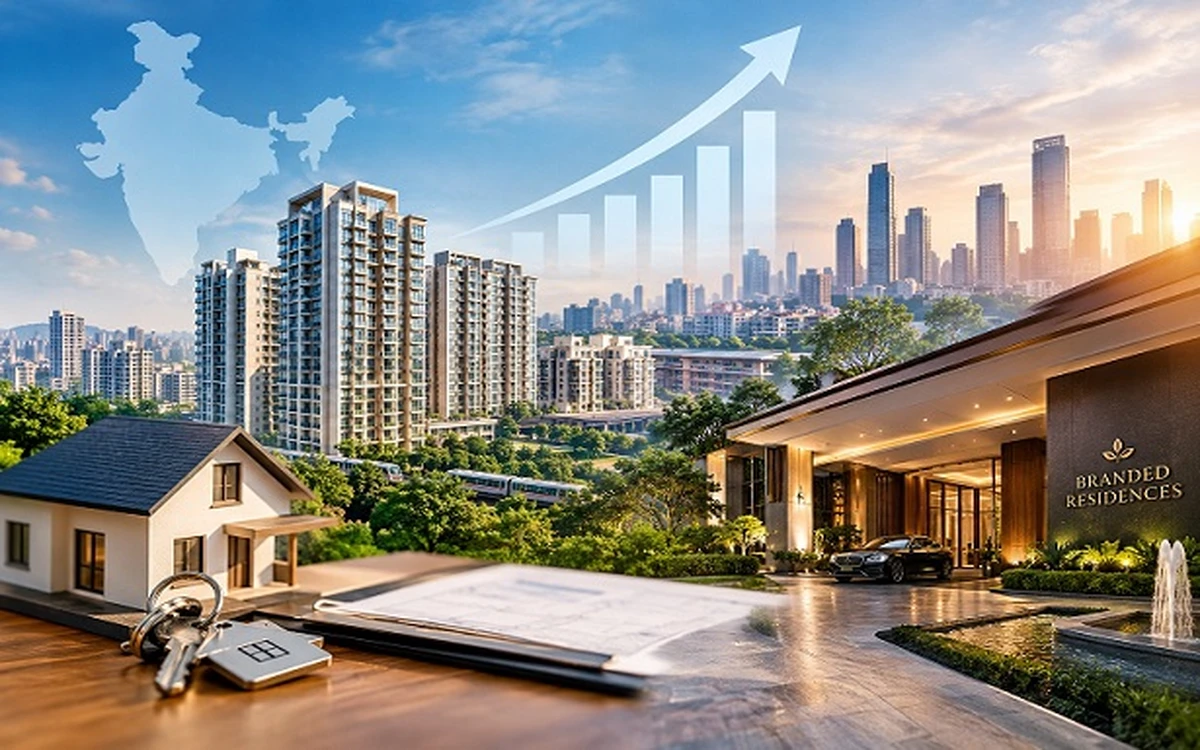
BRANDED RESIDENCES
The global branded residences sector has witnessed sustained expansion over the past decade, reflecting growing demand for premium residential offerings associated with established hospitality and lifestyle brands. Between 2015 and 2025, the sector recorded a compound annual growth rate (CAGR) of 10.9%, nearly twice the growth rate of the broader global hospitality and real estate markets over the same period. Global inventory has expanded from 323 developments in 2015 to ~910 developments by the end of 2025, including a 19% YoY increase from 764 projects in December 2024.
The Asia Pacific region has emerged as one of the fastest-growing markets for branded residences, increasing its share of global supply by 55% over the past five years. Within the region, India has emerged among the top 10 global markets for branded residence projects, both completed and under development, alongside countries such as Vietnam and Thailand, reflecting the region's increasing contribution to the sector's global expansion.
The premium housing sector in India has evolved significantly over the past decade. Traditionally associated primarily with high property values and affluent locations, the segment is increasingly characterised by superior product offerings, lifestyle-led amenities, branded associations, quality construction, integrated communities and professionally managed living experiences.
The premium housing market in India generally comprises residential developments positioned above the mid-income category and targeted at affluent domestic buyers, non-resident Indians (NRIs), entrepreneurs and senior professionals. While price thresholds vary across cities, premium housing is typically concentrated in key metropolitan regions such as the National Capital Region (NCR), Mumbai Metropolitan Region (MMR), Bengaluru, Hyderabad and Pune, where rising income levels and wealth creation have expanded the addressable market for higher-value residential assets.
Growth Potential of Branded Premium Residences in India
Although branded residences have become an established asset class across mature global markets such as the United States, UAE and several resort destinations, the segment remains at a relatively nascent stage in India, indicating significant headroom for future expansion. India has already emerged among the top 10 global markets for branded residence developments, while the Asia Pacific region has recorded one of the fastest growth rates globally, increasing its share of branded residential supply by 55% over the past five years. Despite this progress, the penetration of branded residences in India remains considerably lower than that of several mature international markets, suggesting substantial untapped potential as domestic wealth creation, urbanisation and premiumisation trends continue to accelerate.
The increasing preference for differentiated lifestyle offerings, professionally managed living environments and internationally recognised brands is expected to support further growth in branded premium residences across India's major metropolitan markets. Globally, branded residences command an average pricing premium of approximately 33% over comparable non-branded luxury developments, reflecting stronger buyer confidence, superior lifestyle positioning and enhanced long-term value perception. As the Indian residential market continues to evolve, the increasing adoption of branded residential developments is expected to support higher sales realisations and improved profitability for developers, while creating a sizeable long-term growth opportunity within the premium and luxury housing segments.
Pricing Premiums and Investment Appeal
Branded residences continue to command a notable pricing premium over comparable luxury residential developments, reflecting the value buyers place on established brands, differentiated lifestyle offerings and professionally managed services. Globally, branded residences achieve an average premium of 33% over non-branded luxury projects. Across urban markets, both established and emerging cities record average premiums of 30%, while resort destinations command the highest average premium of 39%, up from 34% in 2024, supported by their lifestyle appeal and relatively limited supply of comparable branded offerings.
The ability of branded residences to sustain premium pricing is influenced not only by brand affiliation but also by factors such as project location, quality of development and operational execution. Buyers increasingly view branded residences as investment assets, with demand driven by the potential for long-term capital appreciation, rental income and stronger resale prospects. The segment has also demonstrated higher viewing-to-sale conversion rates than comparable non-branded developments, underscoring sustained buyer confidence in branded residential offerings and their long-term value proposition.
Industry Trends and Outlook
The outlook for the global branded residences sector remains favourable, supported by a strong development pipeline, expanding geographic presence and evolving consumer preferences. As of 2025, 837 branded residence projects have been signed and contracted for delivery by 2032, which is expected to increase the global inventory to 1,747 developments, representing more than a fivefold increase from the stock available in 2015. The sector continues to broaden its global footprint, with developments spanning over 90 countries, including 25 countries expected to introduce branded residences for the first time.
The branded residences market is also undergoing structural evolution. Standalone branded residences are gaining prominence and now account for 33% of the global development pipeline, reflecting increasing acceptance of branded residential projects beyond traditional hotel-linked formats. While hospitality brands continue to lead the sector, participation from non-hotel brands across design, fashion, automotive and food & beverage segments continue to expand, supported by the entry of 39 new hotel brands and 19 new non-hotel brands into the branded residential market during 2025.
Regional growth continues to be led by Asia Pacific, where the number of branded residence developments has increased significantly over the past five years, with India, Vietnam and Thailand contributing significantly to the region's expansion. At the same time, the market is witnessing increasing premiumisation, with developers adopting international design collaborations and higher quality standards to meet evolving buyer expectations. Demand is also shifting towards experience-led developments that emphasise wellness, curated amenities and professionally managed living environments, reinforcing the long-term appeal of branded residences across global markets.
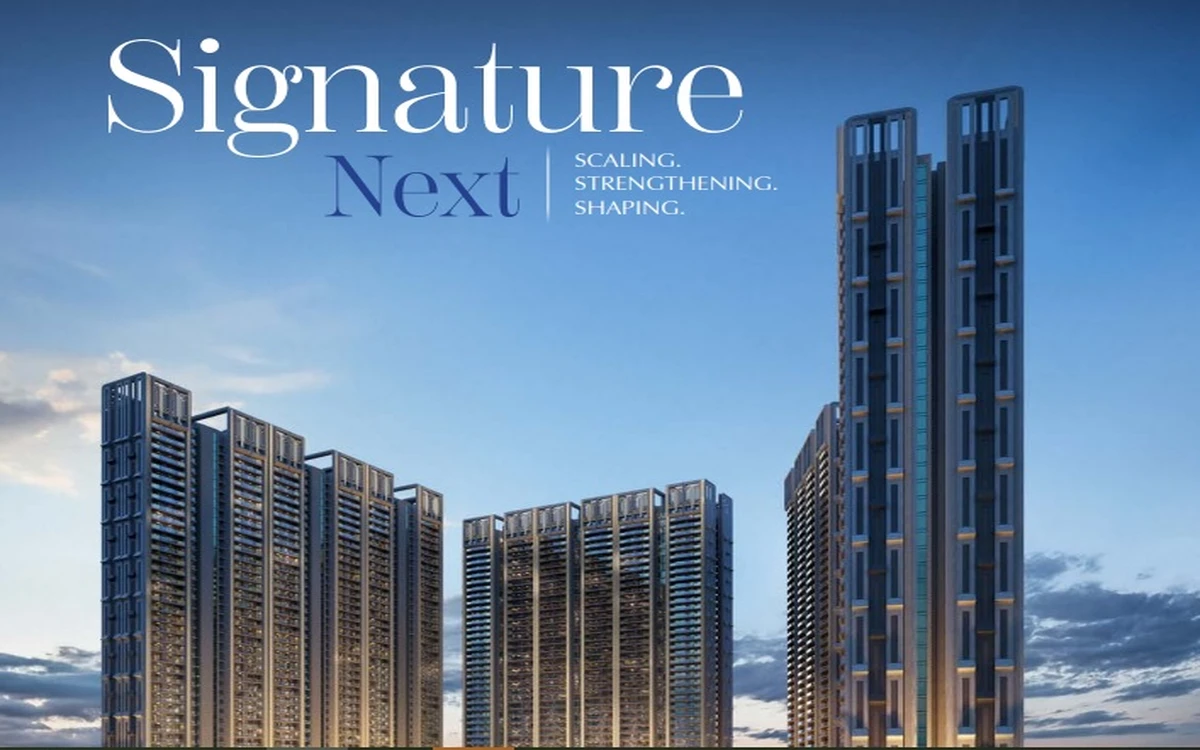
The above report has been extracted from Signatureglobal India’s annual report for Fy 25-26
last week
Total Views : 36
last week
Total Views : 37
last week
Total Views : 35
last week
Total Views : 28
last week
Total Views : 40
last week
Total Views : 37