Loading... Today

-- 0

-- 0
The Print Times
Loan Against Property
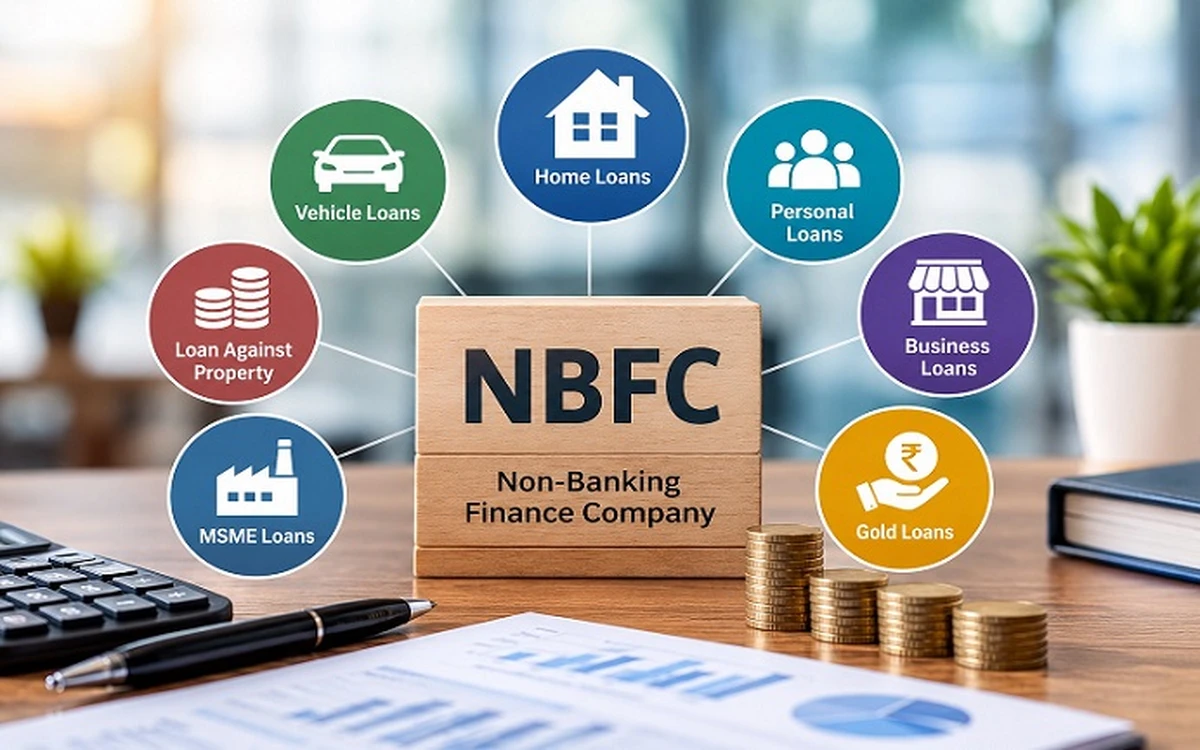
The NBFC Loan Against Property (LAP) portfolio is expected to moderately grow by 19-21% in FY 2026-27, driven by rising property ownership, sustained demand from MSMEs, increasing reliance on secured credit for business expansion, and steady sourcing from non-metro and self-employed segments. However, the ongoing geopolitical tensions in West Asia present incremental downside risks through elevated inflation, supply chain disruptions and moderation in economic activity, which could impact borrower cash flows and asset quality, particularly within MSME-linked segments. While the secured nature of LAP provides relative resilience, portfolio performance and growth momentum remain sensitive to evolving macroeconomic conditions and interest rate trajectory.
NBFCs continue to benefit from customized underwriting frameworks and faster turnaround times, supported by a deep understanding of local property markets, particularly in underserved segments. Retail-ticket LAP loans remain the primary driver of market expansion, with a strong emphasis on asset quality. Ongoing digitization across application processing, documentation, credit assessment, and portfolio monitoring has further enhanced scalability and efficiency while maintaining underwriting discipline.
Housing Finance (Home loans)
The housing finance services industry is expected to report a double-digit growth in revenues on the back of continued healthy demand for housing, particularly affordable housing. The housing finance services industry is likely to grow at a healthy pace on the back of a revival in demand for affordable housing and an increase in demand for mid-segment and premium-segment housing. Analysts expect the portfolio of Affordable Housing Finance Companies (AHFCs) to grow by 19–21% in FY 2026-27. Delinquencies remained stable in FY 2025-26 after a marginal uptick in Q1 FY 2025-26 due to portfolio seasoning for entities that sourced significant portfolios in recent years.
The West Asia conflict could potentially lead to disruptions causing an adverse increase in input costs for construction, softening demand, and tightening cash flows — which could lead to customer income and repayment deterioration.
Personal Loans
Personal loans—constituting ~11% of NBFC AUM—had sharply moderated from 37% growth in FY 2023-24 to 18% in FY 2024-25, driven by regulatory tightening and lender recalibration. However, CRISIL now expects personal loan growth to improve to ~22–25% across FY 2025-26 and FY 2026-27, supported by better performance of recent originations and more calibrated risk selection. This suggests that while the breakneck expansion of earlier years is unlikely to return, personal loan growth is expected to regain momentum in FY 2026-27, significantly higher than the 15–16% moderation projected earlier.
Portfolio Performance and Delinquencies: The ongoing conflict in West Asia has led to an increase in fuel prices, which is reducing the disposable income of retail borrowers. This is also expected to moderate consumption, as households adjust their spending patterns in response to rising costs.
If the conflict persists over a prolonged period in FY 2026–27, it could adversely impact personal loan growth due to price pressures, supply chain disruptions, and potential job losses.
AUM Share of Personal Loans:
With personal loans constituting ~11% of NBFC AUM, a recovery to 22–25% growth ensures that the segment continues to be a meaningful contributor to overall NBFC AUM expansion.
Given that NBFC AUM is expected to grow at 18–19% annually and cross ₹50 lakh crore by March 2027, the personal loan segment is expected to remain one of the stronger retail growth engines.
Unsecured Business Loans: Consumer Durables (CD)
According to industry reports by India Brand Equity Foundation (IBEF), India’s consumer electronics and appliances sector is witnessing strong structural growth and is expected to emerge as one of the largest markets globally. By FY 2026-27, India is projected to become the fourth-largest consumer durables market in the world, with the sector growing at an estimated ~11% CAGR, driven by rising disposable incomes, urbanisation, increasing household penetration, and a shift toward smart, energy-efficient and premium appliances. The market size is expected to reach ~₹3 lakh crore by FY 2028-29, supported by favourable demographics and technology-led consumption trends.
The industry posted double-digit growth through FY 2025-26, with strong demand for premium, feature-rich, and connected products, including large-screen televisions, AI-enabled laptops, and smart appliances. Premiumisation is increasingly visible across categories, reflecting rising aspirational consumption across urban as well as Tier II and Tier III markets.
On the supply side, government initiatives such as the Production Linked Incentive (PLI) scheme for electronics and white goods have strengthened domestic manufacturing and localisation. The PLI programme has attracted investments exceeding ₹1.7 lakh crore and has created more than 1.2 million jobs, significantly boosted electronics production and strengthening India’s manufacturing ecosystem.
The growth of the consumer durables sector is also closely linked to the availability of consumer financing, which plays a critical role in improving affordability and accelerating purchases. Industry estimates suggest that nearly 35–40% of consumer durable sales are financed, supported by innovations such as no-cost or lowcost EMIs, longer-tenure loans, zero down-payment options, digital onboarding, and paperless processing.
As per the latest CRIF report, the consumer durable (CD) loan portfolio outstanding has expanded to ₹96,000 crore, registering ~14% YoY growth, with a ~7% sequential rise during the festive quarter. This indicates a recovery in originations, supported by seasonal demand and continued adoption of consumer financing. Portfolio quality metrics have remained largely stable, with marginal improvements in delinquency indicators across most lender categories.
Looking ahead, in the long term, the CD finance segment is expected to maintain strong structural momentum, supported by rising credit penetration, growth of organised retail and e-commerce channels, and increasing adoption of digital and embedded finance models at the point of sale. Industry estimates continue to project the consumer durable finance market to grow at ~20–22% CAGR over the period 2024–2029, driven by rising consumption in Tier II and Tier III markets and the wider availability of instant credit solutions.
However, in the near term, geopolitical developments—particularly the West Asia conflict—have introduced downside risks to demand. The conflict has disrupted global supply chains and led to a sharp increase in crude oil and freight costs, along with shortages in key inputs such as petrochemicals and semiconductors. At the same time, rupee depreciation has further inflated the landed cost of imported components.
2 weeks ago
Total Views : 74
2 weeks ago
Total Views : 52

2 weeks ago
Total Views : 31
last month
Total Views : 54
last month
Total Views : 57
last month
Total Views : 122
last month
Total Views : 283