Loading... Today

-- 0

-- 0
The Print Times
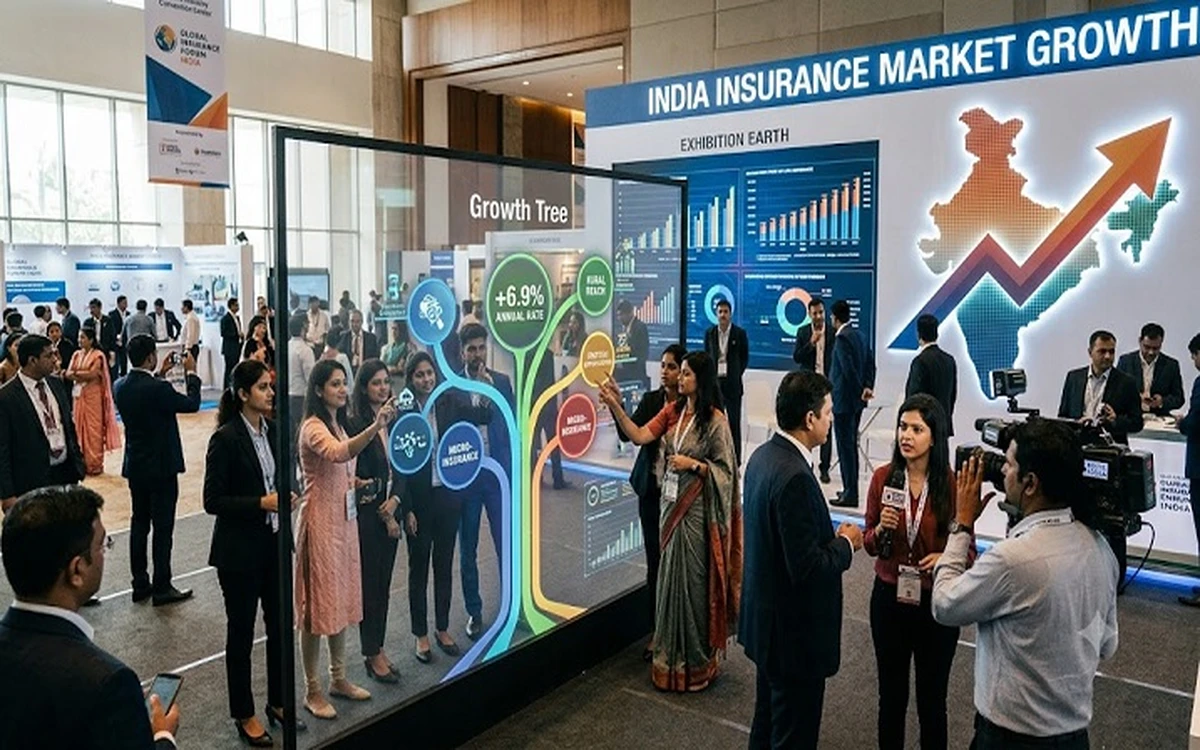
The Indian insurance sector is entering a new era of robust mid-term growth, driven by strong macroeconomic fundamentals and rising consumer demand; according to a Swiss Re analysis “India’s economic and insurance market outlook 2026-2030: resilient and rising amid global shifts. Mid-term annual premium growth is forecast at 6.9% between 2026 and 2030, making India the strongest growing major insurance market.
Swiss Re forecasts that India’s insurance market will grow at an annual rate of 6.9% over 2026 to 2030 in real terms, higher than major emerging and advanced insurance markets.
Reforms by the Insurance Regulatory and Development Authority of India (IRDAI) and broader policy changes by the government are bringing more transparency and reshaping the industry structure for the next phase of accelerated growth.
For life insurance, where India is the second-largest life insurance market amongst the emerging economies, annual growth of 6.8% over the next 5 years is expected to come from widening distribution networks, increasing demand for retirement products and credit growth.
OPPORTUNITIES FOR INSURANCE INDUSTRY
India has world’s largest population: As of 2025, India is the most populous country in the world, with an estimated population of approximately 1.46 billion people. This vast base provides insurers with the largest potential customer pool globally.
Favourable demographics: India continues to have one of the largest young populations in the world, with a median age of 28 years. About 87% of Indians will still be below the age of 60 by calendar 2031. CRISIL Report forecasts that 64% of them will be between 15 and 59 years. This demographic structure ensures sustained demand for protection, savings-linked products, and health insurance.
Urbanisation: In 2025, cities are home to 45 per cent of the world’s 8.2 billion people, more than double the 20 per cent share in 1950. Over the same period, the share of the global population living in towns declined from 40 to 36 per cent, and the share in rural communities fell by half, to just 19 per cent. Projections indicate that two-thirds of the world’s population growth between now and 2050 will occur in cities, with most of the remainder in towns, while the rural population is expected to peak in the 2040s before beginning to decline. Urbanisation of India is one of the most important drive as it will drive substantial investments in infrastructure development, which, in turn, is expected to lead to job creation, development of modern consumer services and increased ability to mobilise savings. An increase in urbanisation has led to improvement in the style of living and awareness to secure financial stability through saving and insurance.
Low Life Insurance Penetration and insurance density in India: Insurance penetration and density are two metrics, among others, often used to assess the level of development of insurance sector in a country. Despite the strong growth in life insurance in India over the years, indicators such as insurance penetration and insurance density indicate that India is still under-insured as compared to Advance Asia Pacific countries such as South Korea, Taiwan, Singapore and Japan etc.
Opportunity: Increasing life expectancy, falling birth rates and wealth concentration among retirees will fuel demand for protection that provides guaranteed income, health and care coverage. New approaches to product design for annuities, risk pooling and bundling care protection will be required to meet the changing needs of ageing populations.
By 2050, a high-income 65-year-old retiring in advanced markets could expect to live a further 23 years. Proportionately, for developing markets, too. This longer retirement, combined with a shift away from guaranteed returns on pension products, means retirees will have substantial savings but no guaranteed income, increasing the risk that they outlive their savings.
Various types of annuities exist to cover this increased longevity risk. However, a broader range of options may be needed to alleviate longevity risk. For example, longevity risk-sharing pools can address mortality, longevity, and health risks simultaneously.
Another urgent need will be cancer protection for older policyholders. The median age of cancer diagnosis is 67, yet most critical illness policies expire before retirement, leaving a protection gap just when the risk becomes highest.
Source: LIC annual report 25-26